Ground Breaking Banter - Rick
Welcome to our 100th episode! We’re celebrating by discussing the concept of “gardentopia” – a place of peace and magic right in your own backyard.
We’re also asking our listeners what you want to hear from us as we move into our next 100 episodes. Please fill out the brief survey here to let us know your thoughts and for a chance to win a Proven Winners ColorChoice swag bag.
Join us on your favorite podcast platform or at the YouTube link above to hear our whole conversation on And here’s this week’s Lim-A-Rick:
Today we are turning one hundred
Where’d the time go, I wondered?
It’s been a successful run
Time flies, we’re having fun
Lots of Latin names I’ve blundered.
Thanks for listening and viewing
Our commitment we’re renewing
Botanical names can aghast
So just say them really fast
Then pretend you know what you’re doing.
One of the most important elements of creating a garden escape is a sense of enclosure – using plants and/or structures to make areas more private. A garden needs vistas, for sure, whether they are epic or modest, but it needs enclosure and privacy just as much. It’s the combination of these two types of spaces that create the experience and lead you through the garden, and it’s central to the concept of “garden rooms,” which I think is one of the easiest ways to approach designing a garden.
Whether you are planting a privacy hedge, screening off a less than desirable view, or enclosing a garden room, the classic choice for many of us, especially in cooler climates, has always been arborvitae like Green Giant or Emerald Green. And those are great plants: lush evergreen foliage, a delicious fragrance from the foliage, and overall quite easy to grow and fast growing enough that you won’t spend your entire life waiting for them to grow in and provide that privacy or enclosure.
But for all their great qualities, arborvitae have two main liabilities: one, they are relished by deer so aren’t even a remote possibility for those of us who struggle with deer in our yards, and two, they’re not usually especially heat tolerant. If either – or both – of those issues apply to you, we’re happy to introduce you to an alternative: Cedar Rapids chamaecyparis, aka false cypress.
False cypress plants are actually pretty common out there in the real world. They’re sometimes referred to generally as Hinoki cypress, though this refers to a specific species, Chamaecyparis obtusa, an evergreen with distinctive fans of foliage that make the whole plant look like it came from a coral reef rather than a Japanese forest. This type is slow-growing, though, and best used as a specimen – as such, false cypress doesn’t usually come to mind as a hedging option. Cedar Rapids false cypress changes that. It’s a selection of Chamaecyparis pisifera, also known as Sawara false cypress (sensing a theme here? Most of the chamaecyparis we grow in our gardens are indeed native to Japan, where they have been selecting them for unique foliage and growth habits for centuries. That said, we do have native chamaecyparis here in the US, they just aren’t widely available or used for landscaping). That scientific name, pisifera, is from the Latin for “pea-bearing,” describing the small cones it bears – though it isn’t remotely related to peas.
Cedar Rapids false cypress is a large evergreen, reaching 30’ tall and 12-15’ wide – so, it’s a big plant, but that narrower base means it takes up less ground space than others. It naturally grows with a lush, dense, pyramidal habit. The branchlets naturally grow with this beautiful flat feathery shape and they aren’t prickly at all. However, chamaecyparis in general are very deer resistant. They’re also tolerant of a wide range of light conditions, from full to part sun, though I wouldn’t recommend them for shade, particularly if coverage is a consideration, as they will be sparse and open if there’s too little light. They aren’t especially finicky about soil, though well-drained so is preferred. They are fairly drought tolerant once they are established. Ideal planted as a hedge or specimen, or group them together to screen off an air conditioner or other unsightly view.
If you’d like to add Cedar Rapids false cypress – or any of the 320+ Proven Winners ColorChoice Shrubs – to your garden or landscape, you’ll find a list of local retailers here.
Gardening Mail Bag - Stacey
Listener Marv shared a photo of how he pairs basil with his tomato plants – what a fun idea! Though some may claim that doing this enhances the flavor of each plant, there’s no evidence that this is the case. Nonetheless, it is certainly a convenient pairing and is satisfying thematically and horticulturally since both want similar growing conditions.
Wondering why Marv’s basil looks different than what you might usually see? It’s because this is Greek basil, sometimes known as bush basil or box basil.

Yes, this plant does indeed show textbook root girdling – a phenomenon that happens when a root begins encircling the plant, which in time can choke it out. Girdling roots on shrubs are definitely less of a big deal than girdling roots on trees, but should still be dealt with as early in the stage as possible. We recommend that you snip out the girdling root as close as possible to the root/soil level on each side; this article has an interesting suggestion of doing this with a chisel and a mallet, which may be easier. You could be fine to cut where it narrows and not have to go into the thickened portion. Either way, we recommend you cut it this fall, perhaps mid-late September, when the temperatures begin to cool. The plant will be heading toward dormancy so will have less top growth to try to support with that reduced roots, and the cooler conditions of fall are ideal for root growth so the plant should have plenty of time to recover.

This is really cool! These are the flowers of ramps, Allium tricoccum, also known as wild leek. In spring, they emerge with broad, succulent leaves and purple stems that have a strong, delicious onion flavor (and will also give you the worst onion breath of your life, just FYI – but it’s worth it). But as for flowers, well, those appear “naked” – without any foliage – in mid-summer. It’s an odd flowering strategy, which makes scenes like this all the more interesting. The reason that you may have been hiking here for years and have never seen anything like it is because ramps need to be very mature to flower – it’s estimated that they need 7-9 years. So enjoy this beautiful and rare treat, and if you can harvest ramps here with permission, be sure you don’t overharvest; ramps are becoming increasingly uncommon due to overharvesting and substantially increasing demand.

This is a mutation known as a chimera. It shares its name with the fire-breathing monster in Greek mythology that had the head of a lion, body (and head) of a goat, and tail (and once again, head) of a serpent. What do they have in common? Well, both are made of different parts – or, in the case of the plant, different genes. Sometimes, as the growth is developing, a mutation occurs in the growth point and the result is that the growth is comprised of two distinct genes. It’s not common, but nor is it uncommon, and it’s not a cause for concern but just a natural mutation that pops up now and then. Plants in the daisy family, as echinacea is, seem particularly prone to chimerism. The actual science behind it is complicated, so if you are interested, dive in here. If all you want to know is what to do if you see a plant doing this, the answer is nothing – it may or may not be stable. If it is stable, it will continue to return year after year for you to enjoy and amaze your family and friends with. If it’s not, it will just disappear and the plant will likely just show its normal growth for that variety.

Do you have a question for us? We’re happy to help! E-mail us or use the contact tab above. Due to high volume, we may not get to your question, so if you need an answer quickly, please reach out via the Proven Winners website.
Branching News - Rick
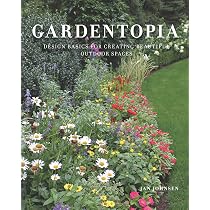
To celebrate the theme of Gardentopia, we’re joined by landscape designer Jan Johnsen of Johnsen Landscapes and Pools in Mount Kisco, New York. Jan literally wrote the book, Gardentopia, which is a beautiful source of inspiration and ideas for transforming any sized yard into a utopian vision you can escape to any time. We talk to Jan about the concept of Gardentopia and how to achieve it in your own backyard.
We highly recommend this beautiful book, as well as following Jan on Instagram where she posts inspiring garden ideas from around the world every single day – follow her at @johnsendesign. In the meantime, join us on your favorite podcast platform or at the YouTube link above to hear our whole conversation with Jan.