
Ground Breaking Banter - Rick
In addition to the Proven Winners Shrubs of the Year, industry experts also select Proven Winners Annuals of the Year, which for 2025 is Supertunia Mini Vista Yellow petunia; the Caladium of the Year – which many gardeners treat as an annual – is Heart to Heart Blushing Bride caladium.
Join us at the YouTube link above or on your favorite podcast platform to learn more about the 2025 Proven Winners Annual and Caladium of the Year – they will be waiting for you at your local garden center this spring!
Last episode, we talked about how much the color yellow does in the garden, based on the 2025 Annual of the Year, Supertunia Mini Vista Yellow. So naturally, it makes sense to base this week’s plant on trial on the color of the 2025 Houseplant of the Year, Prismacolor Orange You Gorgeous philodendron. There are actually a lot of orange and orange-adjacent Proven Winners ColorChoice Shrubs that I could choose to feature today, but I’m going to take the opportunity to introduce a totally new and very interesting new member – Bambino Variegated Orange bougainvillea.
I don’t know about you, but for me, no plant says “vacation” like bougainvillea, perhaps because it is one of the few truly perpetually blooming woody plants. If you aren’t familiar with it, it’s typically a vigorous woody vine that is absolutely covered in thousands of brightly colorful paper-like bracts that enclose one to three tiny white flowers within. Nearly any hot climate you visit around the world, you’ll see bougainvillea in full, bright bloom since it rarely takes a full break from flowering. It’s closely related to the annual plant known as four o’clocks.
Normally, bougainvillea is a big, vigorous, woody vine that climbs using the small spiky protuberances on its branches, so it requires a very sturdy support and usually, lots of pruning to keep it in check. But the Bambino series of bougainvillea changes all of that. Coming to us from Australia, it’s made up of dwarf, shrubby varieties that stay just a few feet tall, making them perfect for landscapes, gardens, and containers – any place where you want that perpetual color of bougainvillea but don’t have the space for the support they require.
Bambino Variegated Orange bougainvillea is my personal favorite of the bunch. I’ve said many times here on the show that variegated foliage is extremely polarizing, and I can’t say that I universally like it. But when I like it, I really, really like it, as in this case: The leaves are a mixture of sage green, mint green, and creamy yellow – very similar to our Sugar Tip rose of Sharon, in fact. And the flowers (or more properly, the bracts) are the most fabulous orange color, which starts and ends pink. I adore that combination and it is done to perfection in each bract of Bambino Variegated Orange bougainvillea. It reaches just 2-3’ tall and can be left to grow kind of loosey goosey, or trimmed into tight shapes.
As you may have already known or could certainly guess by now, like all bougainvillea, Bambino Variegated Orange is a tropical plant that cannot be grown outdoors in cold climates. It’s hardy down to USDA zone 9 and heat tolerant through at least USDA zone 11 and thrives in both tropical and arid hot climates. It’s also a sun-lover, requiring at least 6 hours of full bright sun, even in the hottest climates. In cold climates, it makes an excellent choice for some fun, non-stop summer color on your patio or deck, color which can’t really be matched by any other tropical plant. It also attracts hummingbirds.
While it would be perfectly acceptable to treat Bambino Variegated Orange bougainvillea – or any of the other four colors of Bambino bougs, as they are known – as a summer annual and let it go with the first frost, you can bring it in and try to grow it indoors. I’m not gonna lie, bougainvillea is not going to be the easiest plant to keep alive inside. Though many herbaceous plants from similarly tropical climates are quite forgiving about indoor conditions, woody plants like bougainvillea are often much trickier. Provide the most sun and best air circulation that you can, and if possible, some humidity. Don’t overwater. Don’t be discouraged by leaf loss and a lack of blooms, that’s normal under typical indoor conditions. And as soon as the weather starts to get warm again, put that plant outside and let it start to get full sun and fresh air. You should be good to go for another season of blooms.
If you’d like to add Bambino Variegated Orange bougainvillea – or any of the 320+ Proven Winners ColorChoice Shrubs – to your garden or landscape, you’ll find a list of local retailers here.
Gardening Mail Bag - Stacey
First, a few comments:
Listener Jackie writes: Hi Rick and Stacey!
I LOVE my superbena. I will always have it in my garden and all the pollinators love it too. They are always filled with butterflies and the hummingbird moths visit regularly. I thought you might enjoy these!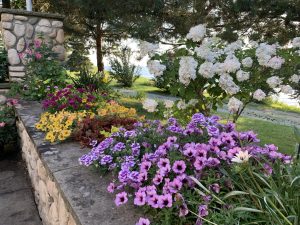
We also got an interesting comment from listener Tom:
Hardiness Zone is great but with the environmental changes occurring today I feel a strong need for Heat Zone information on plants as well. I have had too many plants rated for my zone fail due to their intolerance to my heat conditions. I won’t purchase a new to me plant without heat zone information or a recommendation from a successful local gardener who is growing it successfully for at least 3 years.
This is a really great point, Tom, and is a huge pain point for gardeners in hot climates – and even to gardeners in cold climates where summers are disproportionally hot compared to winters. The USDA hardiness zone map only deals with how much cold a plant can withstand and does nothing to address how much heat it can take. Several years ago, the American Horticultural Society created the AHS heat zone map, which classified the country into heat zones based on how many days above 86°F an area experienced. Unfortunately, they pulled this map from the internet because it needed updating and they didn’t have the labor or funds to do so. Heat tolerance is sure to become an even bigger issue in the coming years, so something must be done for sure. If anyone wants to get in touch with an idea or proposal on it, just use the contact us tab above!
I have soil that was used in a pot for two years and now the plant is gone. Can I reuse the potting soil? There's a lot of broken up roots and in parts of the pot the soil is a light brown color instead of darker black like. Should I just add organic matter to amend it? Not sure if the root bits are a problem. - May
Both Rick and I are huge proponents of saving and re-using potting soil. The main component of most potting soils is peat moss, which is considered a slowly renewable resource, so it is crucial to conserve it. Besides, who doesn’t want to save money, especially when it can still readily fulfill its main roles in plant growth: to serve as a rooting matrix and hold on to water for the plant to take up. Any bits of leaves, old plant parts, and roots that you can easily remove, do so, but don’t worry if some roots are still in it, they will just add organic matter. And since most potting soils do contain organic matter, like manure or compost, when they are new, you can easily mix in fresh compost and recharge it.
Some people get concerned about disease when they reuse potting mix, but unless something really serious has happened, it’s not usually an issue. Most fungal root diseases occur in situations where the soil is poorly drained and stays wet for long periods, which is not an issue with potting mix in a container with good drainage, so it’s highly unlikely to harbor any pathogens that could harm future plants, especially if it has dried out.
I'd like to know how to cut a corn plant off, grow new roots and replant in fresh soil. It is now hitting a 9 foot ceiling. I have a large redwood pot which will be good, I think, but it is filled with very old soil and I want to remove it and fill with fresh. But what kind? Please discuss if this is possible and how to do it. I've been listening a long time. Love your program. - Fay
The popular houseplant known as corn plant is Dracaena fragrans. Though it isn’t remotely related to corn, it does look quite a bit like a corn stalk, with rings of long, strappy green leaves that are often variegated. It’s not uncommon for these easy care, long-lived plants to reach some pretty stunning heights, though 9′ tall is really something! Fortunately, it’s easy to bring your plant back down to size by propagating it. All you have to do is cut out a good 10-15″ (roughly) long section of the plant. Peel away the bottom layer of leaves, if present, to reveal fresh white tissue at the bottom. If you have rooting hormone, put some on the cut end – if not, don’t sweat it. Then put this cutting into an appropriately sized container with moist potting soil to the depth of that white section, firm the soil around it, and perhaps cover with a large clear plastic bag to increase humidity. Avoid letting the leaves touch the bag, and keep out of strong sunlight which will cause excessive condensation. In perhaps 6-10 weeks or so (it depends on conditions and the health of the plant), it should start to put on roots and the bag can be removed. Avoid letting the soil become too dry or too wet and the plant should be well on its way to another 9′ tall! You can actually repeat this as needed down the length of the remaining plant, provided it has leaves. Whatever is remaining in the original container can continue to be watered and will eventually put out a new leader and begin growing from that.
Do you have a question for us? We’re happy to help! E-mail us or use the contact tab above. Due to high volume, we may not get to your question, so if you need an answer quickly, please reach out via the Proven Winners website.
Branching News - Rick
In the spirit of celebrating tropicals at the tail end of the recent polar vortex, we are thrilled to officially announce that Hollywood Hibiscus tropical hibiscus are now part of the Proven Winners ColorChoice line and will be available at your local garden center this summer in the distinctive white container. Hollywood Hibiscus were selected by J. Berry Nursery in Texas for extra large, extra bright flowers that open fully and stand out from the plant facing you, instead of nodding downward. These seem like minor improvements until you compare Hollywood Hibiscus side by side with a conventional variety! If you love making colorful tropical hibiscus a part of your yearly summer plantings, you’ll see how much better than other hibiscus they are. And if you don’t make tropical hibiscus a part of your summer planting, this season would be the perfect time to try! There are 13 different varieties with a color and pattern for any taste – explore them all here.
Join us on your favorite podcast platform or at the YouTube link above to hear our whole conversation about Hollywood Hibiscus.


